Method

Method

Pipeline Overview

Pipeline Overview

Protected input -> transform -> tokenize -> slice -> measure -> summarize -> chart.

Protected input -> transform -> tokenize -> slice -> measure -> summarize -> chart.

Shows how protected source material becomes normalized, measured, charted, and published as aggregate evidence.

Shows how protected source material becomes normalized, measured, charted, and published as aggregate evidence.

Public-safe workflow

PRM Analysis Pipeline

PRM Analysis Pipeline

Public-safe boundary: aggregate behavior is shown; protected text and reconstructable mappings are not published.

Public-safe boundary: aggregate behavior is shown; protected text and reconstructable mappings are not published.

01

Protected PRM Corpus

Protected PRM Corpus

Original source material remains private.

Original source material remains private.

02

Controlled Public-Safe Transforms

Controlled Public-Safe Transforms

Analysis copies are prepared for measurement without publishing protected text.

Analysis copies are prepared for measurement without publishing protected text.

03

Tokenizer + Slice Runs

Tokenizer + Slice Runs

Text is measured across declared tokenizer, window, and comparison conditions.

Text is measured across declared tokenizer, window, and comparison conditions.

04

Metric Families

Metric Families

Entropy, lexical behavior, repetition control, phonetic structure, rhyme architecture, and chronological movement.

Entropy, lexical behavior, repetition control, phonetic structure, rhyme architecture, and chronological movement.

05

Index + Summary Layer

Index + Summary Layer

EURE, LDI, RACS, trend summaries, rankings, and aggregate comparisons.

EURE, LDI, RACS, trend summaries, rankings, and aggregate comparisons.

06

Public-Safe Evidence

Public-Safe Evidence

Charts, dashboards, captions, findings, and glossary explanations.

Charts, dashboards, captions, findings, and glossary explanations.

07

Controlled Review Gate

Controlled Review Gate

Source-level materials, private mappings, manifests, and deeper technical review remain reserved for appropriate review or agreement.

Source-level materials, private mappings, manifests, and deeper technical review remain reserved for appropriate review or agreement.

Integrity Controls

Integrity Controls

Versioning, checkpoints, hash records, review logs, and disclosure boundaries support traceability without exposing the protected corpus.

Versioning, checkpoints, hash records, review logs, and disclosure boundaries support traceability without exposing the protected corpus.

Simple Version

The pipeline is the repeatable path that turns protected corpus material into public-safe aggregate evidence.

Stages

1. Prepare source text inside the private boundary
2. Generate RMR and TQT transforms
3. Run tokenizer passes
4. Generate slice windows
5. Measure metric families
6. Compile summary workbooks
7. Generate chart assets
8. Package public-safe outputs

What Each Stage Protects

The pipeline keeps source material and public material separated. Raw writing and private mappings stay inside the controlled review environment. Public outputs describe aggregate behavior, metric structure, and chart evidence.

Transform and tokenizer stages let the same underlying material be measured through multiple processing lenses. Slice windows make the result harder to explain as one favorable excerpt. Summary workbooks and chart exports create a reviewable trail from measurement to public presentation.

What This Page Proves / Does Not Prove

This page supports a process claim: PRM results are produced through a repeatable path from protected input to public-safe aggregate output.

It does not prove every source-level detail by itself, publish the protected corpus, or expose implementation-sensitive review material. The public pipeline page explains the measurement path; controlled review is where source manifests, provenance records, and reproducibility notes can be inspected under appropriate terms.

Why Repeatability Matters

The pipeline is not only about producing charts. It is about making claims auditable.

If the same corpus structure can move through the same stages and produce the same public-safe outputs, the site can separate presentation from evidence. Findings tell the story. The pipeline explains how that story was measured.
Evidence Charts

Evidence Charts

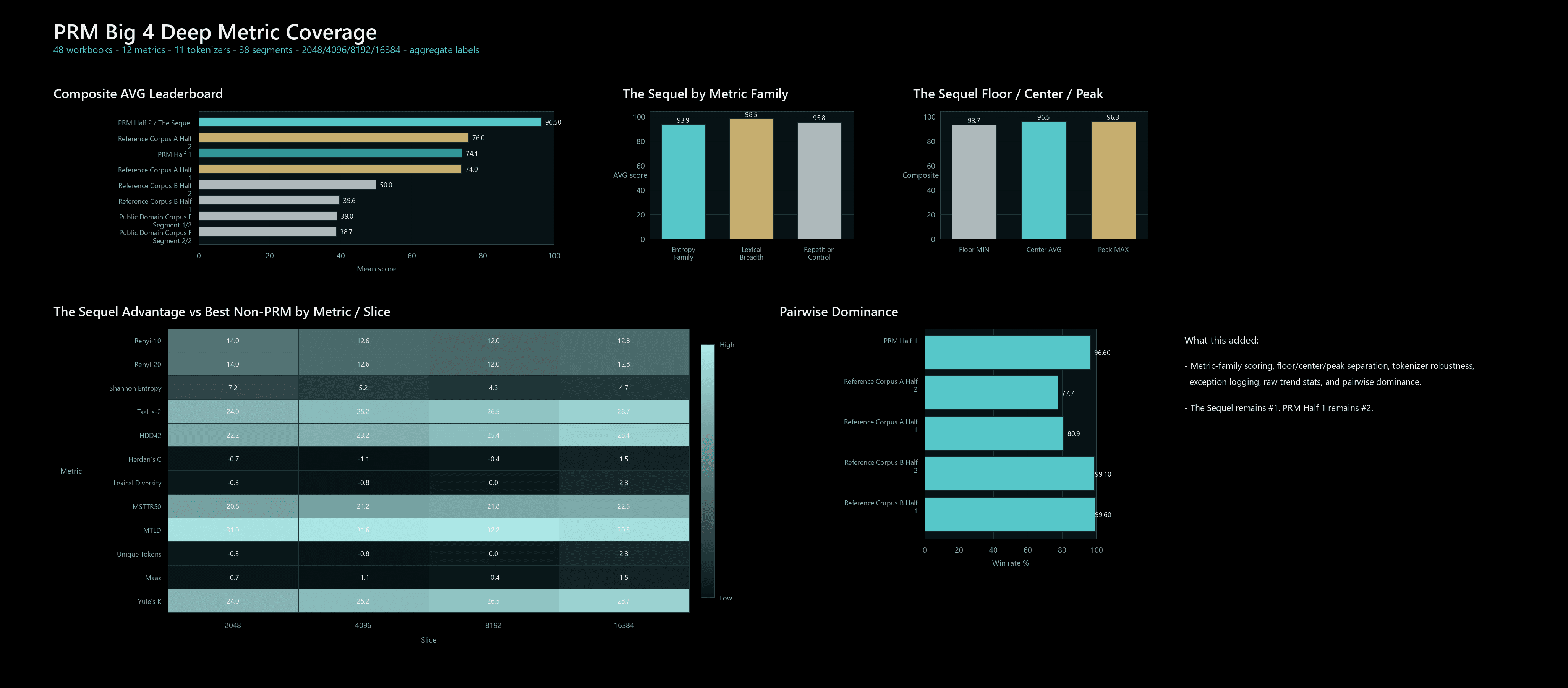
Start with the coverage story dashboard for the high-level map of what the pipeline produces. Then use the deep metric coverage dashboard to see the breadth of the measurement surface.

Start with the coverage story dashboard for the high-level map of what the pipeline produces. Then use the deep metric coverage dashboard to see the breadth of the measurement surface.

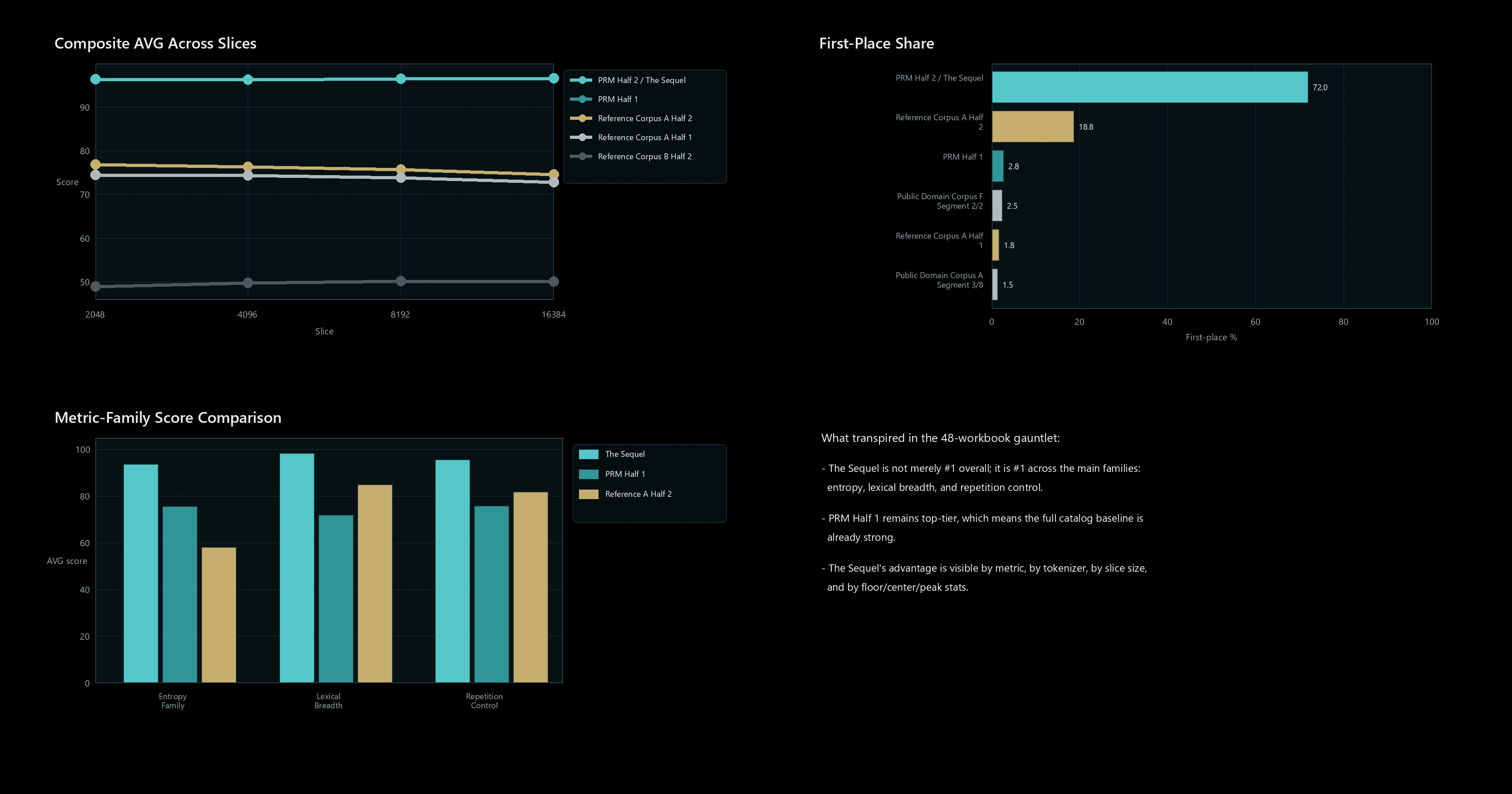
Deep coverage story dashboard

Deep coverage story dashboard

Frames the dataset evidence as coverage, not a corpus download.

Frames the dataset evidence as coverage, not a corpus download.

Deep metric coverage dashboard

Deep metric coverage dashboard

Summarizes how much measurement sits behind the public evidence layer.

Summarizes how much measurement sits behind the public evidence layer.

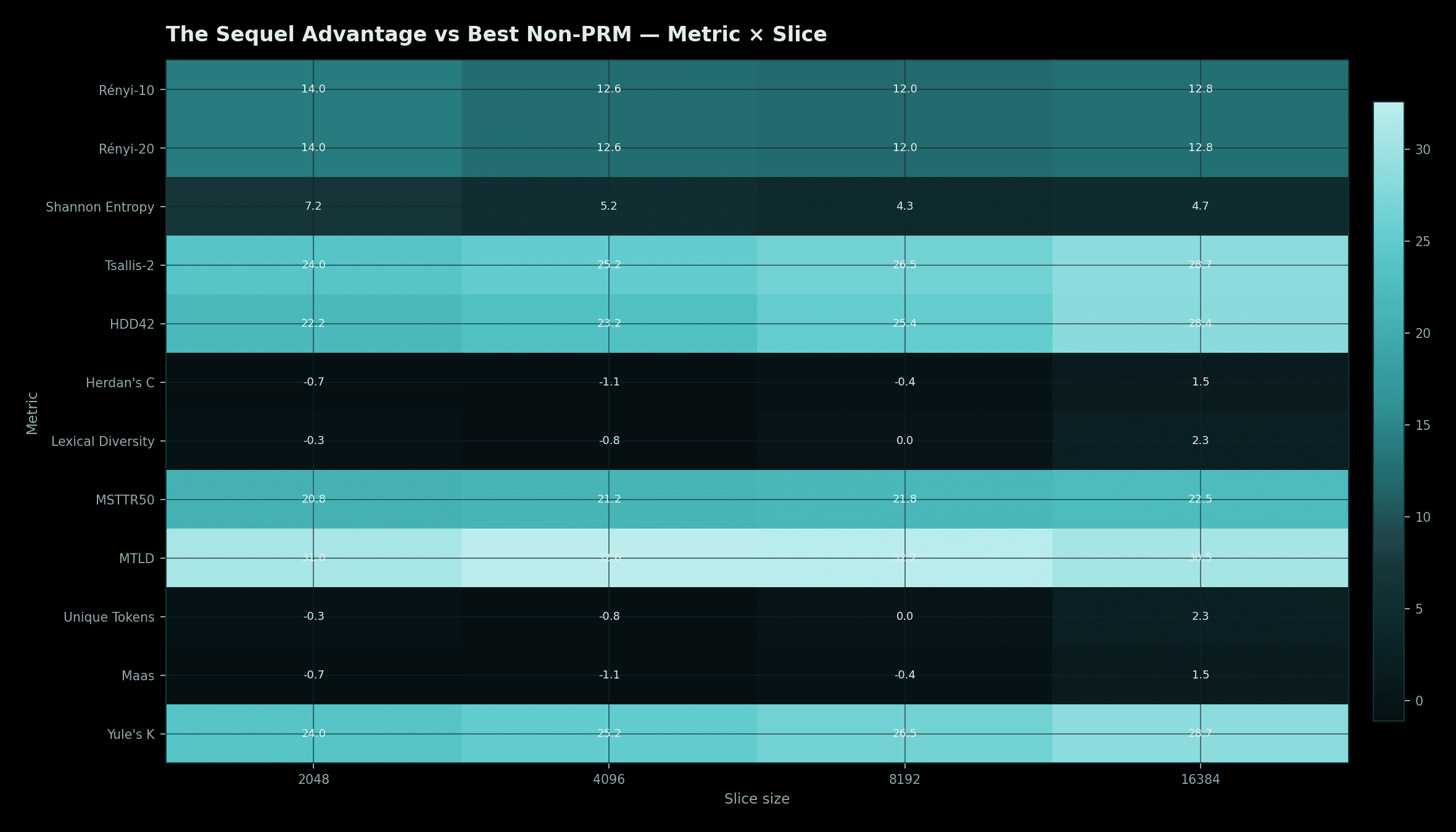
Metric slice delta heatmap

Metric slice delta heatmap

Maps metric deltas across Solo Dataset slices.

Maps metric deltas across Solo Dataset slices.

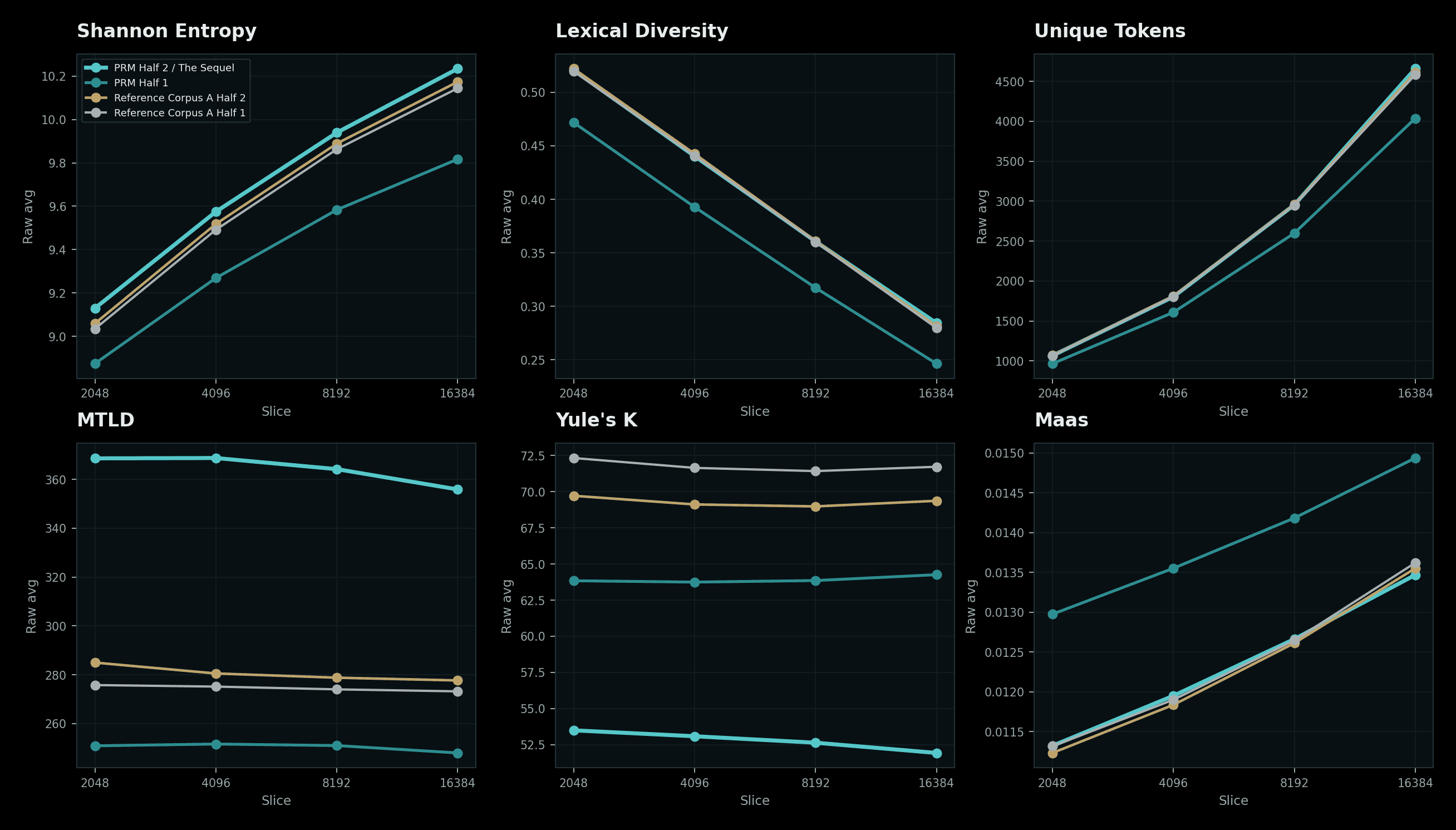
Raw metric trends across focus segments

Raw metric trends across focus segments

Tracks major raw metrics across large-window focus segments.

Tracks major raw metrics across large-window focus segments.

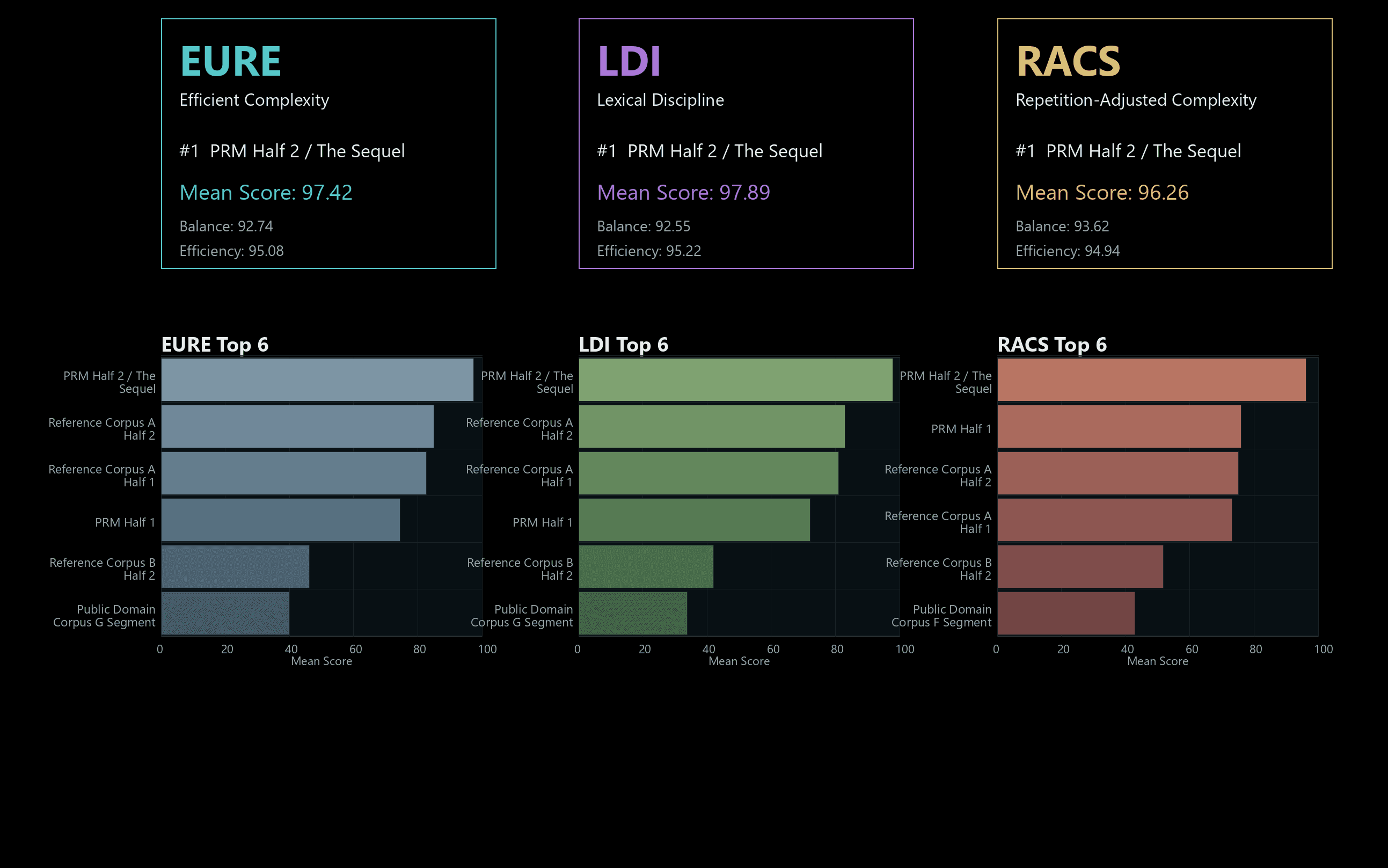
Metric index web dashboard

Metric index web dashboard

Summarizes the EURE, LDI, and RACS index layer for the public site.

Summarizes the EURE, LDI, and RACS index layer for the public site.

Pipeline Chart Boundary

Pipeline charts show aggregate output behavior and coverage patterns. They do not publish protected source text, private manifests, or reconstructable source maps.